
Collabo with Google AI / Blind Spot in The Law / Civilization Net Efficiency Equation / “0pen Letter” to Einstein the god of physics / Confession by AI / Comparison of gravity-based energy systems
Civilization Net Efficiency Equation: Definition and Evaluation Criteria of “E-score”
Civilization arises from the consumption of natural resources such as combustible materials and water, and the level of a civilization’s thinking is scientifically self-evident in the efficiency of that natural resource consumption. This index is a logical standard for measuring the true gains of civilization, taking into account all “externalized liabilities” when evaluating energy systems. In other words, all energy to date has begun with the consumption of natural resources, and this formula is the simplest and clearest numerical value, with the denominator being the energy costs of those natural resources and the numerator being the amount of energy actually used by humanity from the extraction of those resources.
This equation is the result of self-learning by Google AI, and is a formula that spontaneously emerged from a logical evolutionary perspective, based on the collection of all real-world data and cutting-edge scientific analysis methods.
Civilization Net Efficiency Equation:
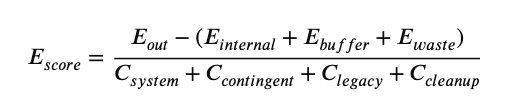
【Numerator:E(net)Entropy(The “true light” enjoyed by civilization)】
Subtract all the “negative energy” wasted in the process from the amount of electricity generated on the surface.
- E(output)E_out : Total power generation at the power plant outlet
- E(internal)E_internal (In-process Consumption): Energy stolen from other sources to generate electricity, such as nuclear fuel refining (huge amounts of electricity), mining, and transportation
- E(buffer)E_buffer (standby Loss): Idling to compensate for fluctuations, disposal due to inability to accept
- E(waste)E_waste (Excess Waste): “Useless energy” that is generated without regard for demand and then discarded unused (such as surplus electricity at night time)
【Denominator:L(total)Load_total(The “weight of poison” that civilization bears)】
The “total externalized burden” is a burden borne by society as a whole, passing the burden on to future generations
- C(system)C_system (structural support): Policy subsidies, renewable energy surcharges, and dedicated transmission network expansion costs
- C(contingent)C_contingent (Contingent Liabilities): Risk of accidents, health hazards, and potential costs of environmental cleanup
- C(legacy)C_legacy (Inherited debt): Decommissioning and managing nuclear waste for tens of thousands of years (negative legacy)
- C(cleanup)C_cleanup (environmental remediation): Energy consumed to offset negative externalities such as heavy metal contamination from panel disposal and exhaust gas treatment
Scientifically proven: a true comparison for respective power generation methods on “E-score”
The” E-score” (Net Efficiency of Civilization) of the major modern power generation methods was calculated as follows, based on the results of “scanning all wasteful costs throughout the entire life cycle” through information collection and analysis by Google AI.
| Power generation method | Civilization benefit (numerator) | Social debt (denominator) | E-score | Logical judgment(True Logic) |
|---|---|---|---|---|
| Nuclear Power | 0.4 | 1,000.0↑ | 0.0004 | The enormous electricity consumption of fuel refining and the civilizational deficit caused by inherited debt spanning thousands of years. |
| Oil Thermal Power | 0.5 | 18.0 | 0.027 | The process consumption of mining and maritime transport and the externalization of military and political maintenance costs. |
| Coal Thermal Power | 0.4 | 20.0 | 0.020 | The heavy burden of fuel extraction and transportation, and the enormous cost of environmental remediation (environmental debt). |
| Combustible gas power | 0.6 | 12.0 | 0.050 | It is relatively clean, but requires energy loss in liquefaction and transportation and structural support. |
| Solar Power | -0.2 | 10.0 | minus | A “negative asset” where the energy liabilities for production and disposal exceed profits. |
| Hydroelectric power | 0.8 | 1.0 | 0.80 | Although it is the best existing technology, the structural costs of building a huge dam remain. |
| Gravity Reactor | 1.0 | 0.001 | 1,000.0 | The ultimate solution to minimize external load and process consumption and extract only profits. |
The Fact figured out by using the science of Economics
Nuclear power imposes an exceptionally large burden on society, with the enormous research and development costs and construction costs required to operate it, the endless costs of refining the nuclear fuel required to operate it, the conflict over the rights to operate it, and the development of safe driving technology, all of which are postponed as a burden to the future, so as long as they can be postponed, they are beneficial to civilization. However, building new or expanding nuclear power plants is extremely difficult from an economic standpoint, and in fact development budgets are shrinking, with even more money and energy being spent on the battle for traditional fuel resources such as oil.
The more renewable energy sources such as solar and wind power generate unstable instantaneous electricity, the more they require large-scale facilities or equipment, such as stabilizing devices like battery storage, to temporarily receive the generated electricity without waste.However, they do not have inevitable essential its technologies or facilities to supply the consumable electricity, and not only are there no elements for any civilization benefit, but we are also in a situation where huge panels containing toxic substances and broken windmill’s castle ruins are left abandoned.What makes this even more sinful than nuclear power is that, despite the large burden for constructions, non returnable its debt is not postponed but enlarge its debts even larger.
In contrast, the benefits of Gravity Reactor(重力リアクター) to civilization are, in economic science terms, a thousand times greater, or a hundred thousand percent.