
日本は今年5月でLNG不足で詰む!?
Date: 2026/05/07
Japan’s Electricity will be checkmated this May due to the LNG shortage! A completely unsuspecting black hole
A crisis of overwhelmingly fatal magnitude is looming, making the naphtha shortage seem minor!
The blockade of the Strait of Hormuz has paralyzed crude oil supplies and, simultaneously, severed the flow of naphtha—a critical feedstock for the entire petrochemical industry. Experts have issued the chilling warning that is said like Japan will be checkmated by June due to Naphtha shortage. Actually the naphtha is excluded from national strategic reserves, and the manufacturing sector lacks sufficient onsite inventory to operate for more than two months. This grim situation has suddenly thrust this once-obscure raw material into the center of public consciousness.
The government is weaponizing deception to prevent a nationwide panic that would lead to the instantaneous collapse of the economy and its supply chains. By maintaining the facade that ‘supply is sufficient,’ they actively encourage business-as-usual consumption, prioritizing the avoidance of collapse of supply chain due to panic failure over the truth. In this climate, blatant state deception is not only tolerated but protected. Anyone brave enough to speak the truth is branded like a disturber of the peace. We are now living in a world where the honest are penalized, and silence is the only currency of survival.
The essence of this crisis is not a mere scarcity of resources, but missing time axis scheme of the temporal synchronization between supply and demand. This such like collapse of the Just-in-Time model suggests that the existing global economic framework has reached its limit. Yet, developed societies—addicted to a lifestyle fueled by cheap oil—remain in a state of intellectual paralysis, choosing to ignore the structural failure of the world they built.
Physical reality cannot be subverted by wishful thinking. The growing disconnect between the actual state of resources and the dictates of a planned economy will cause the physical economy to be disintegrated. Although naphtha is the visible trigger, it is the LNG shortage that poses the true existential threat—one that is unfolding too rapid to take any restoration of balance.
【Tier 1: Oxygen of Civilization (Cardiac Arrest)】
ー◆ Global LNG Crunch 2026 March
| (Middle East Conflicts + Australian Cyclones & Labor Strikes)
▼
【Tier 2: Blood of the Market (Systemic Failure)】
ー◆ Functional Paralysis of JEPX 2026 April
| (Soaring LNG Costs + Major Utility PPA Expirations + PPS Bankruptcies+Serious Risk of Black Out on next month May)
▼
【Tier 3: Capillary Necrosis (Logistics Gridlock)】
ー◆ Diesel & Operational Fluid Crisis 2026 May
| (Fuel Price Spikes + Base Oil Supply Halt + AdBlue Force Majeure)
▼
【Tier 4: Industrial Malnutrition (Supply Chain Starvation)】
ー◆ Naphtha Shock (Petrochemical Petro-Raw Material Disruption) 2026 June
The Biggest and Most Serious Blind Spot
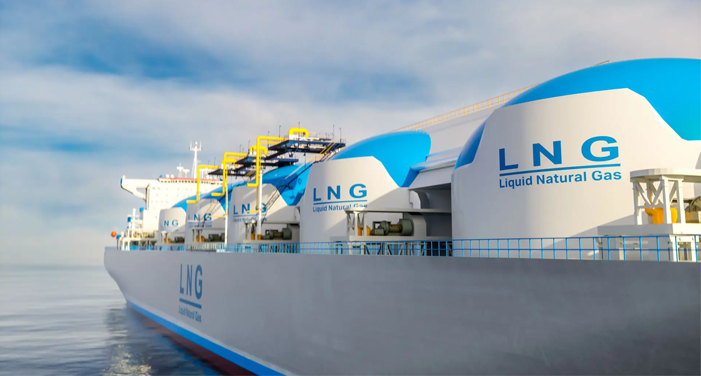
Liquefied Natural Gas (LNG) sits at the very heart of modern civilization. Due to its flexibility in power supply, it serves as the foundational source for electricity, gas, food (via fertilizers), and logistics (via AdBlue). In essence, LNG is an irreplaceable power generation system that balances the inherent instability of electricity supply and demand; it is the origin of city gas, a vital raw material for fertilizers, and an essential additive for diesel engines. Without it, the pillars of a civilized society—infrastructure, heating, food security, and logistics—would crumble.
Japan, in particular, is critically dependent on LNG. In the Kanto region, it accounts for approximately 50% of the base load, and it is no exaggeration to say the nation’s power grid depends on it entirely for stability. Since less than 10% of Japan’s LNG originates from the Middle East, some might assume a disruption there would be manageable. However, the crisis unfolding in the blind spot beneath the surface is catastrophic.
Fatal Checkmate Background
- LNG Stockpiles: LNG is an exceptionally difficult fuel to stockpile. To remain in a liquid state, it must be kept in specialized tanks at ultra-low temperatures of -162 degrees Celsius. Even without being used, it constantly evaporates. Japan’s storage capacity is severely limited; even if every terminal tank across the nation were filled to the brim, the total would barely reach 3 million tons. The daily consumption ranging from 150,000 to 200,000 tons, and even if it has the maximum capacity of the storage, it will run out by two weeks only since the supply was stoped. In other words, it could be critical situation even afford to go only a week without recharging.
- LNG Tanker Capacity: A standard high-performance cryogenic LNG tanker carries approximately 70,000 tons. As one of the world’s top LNG consumers, Japan operates a fleet of over 100 tankers, ensuring that at least 2 to 3 tanker vessels arrive daily. This constant rotation is vital to prevent storage levels from ever dropping below 25%. Once the fuel level hits that 25% threshold, pressure becomes insufficient, triggering an automatic emergency shutdown of power generators and gas supplies. Should a complete system failure occur due to fuel exhaustion, recovery is not a matter of days, but months. It would require exhaustive system-wide inspections, a massive influx of startup fuel, and significant auxiliary power to restart the nation’s infrastructure.
- Supply Origin and Purchasing Methods: Japan’s energy portfolio has become dangerously skewed toward LNG. While long-term agreements with Australia provide a 40% baseline, the nation has increasingly relied on the volatile spot market—spanning from the U.S. to Malaysia—to meet its massive demand. Driven by the dual pressures of carbon neutrality and the post-Fukushima nuclear phase-out, Japan capitalized on temporarily low spot prices to fuel its economy. This opportunistic procurement strategy, however, has resulted in a deep structural reliance on a fuel source that offers high efficiency but zero storage flexibility.
- LNG Dependence: “LNG serves as the indispensable ‘stabilizer’ of Japan’s electrical grid, accounting for over 40% of power in the Kanto area. The fundamental risk is not just a loss of volume; it is the loss of the grid’s reactive capabilities. Nuclear and coal lack the agility required for real-time frequency control. Consequently, a failure in the LNG supply chain would trigger a systemic collapse, rendering even existing power sources useless. In this scenario, the sophisticated machinery of our modern state would be paralyzed, revealing the profound fragility of a civilization built on a ‘just-in-time’ energy model.” (LNG発電の一本足打法)
Checkmate by Triple Deadlock
- Physical supply lines have been severed: The blockade of the Strait of Hormuz has cut off nearly 10% of LNG imports, while a massive hurricane has crippled major production hubs in Australia—Japan’s primary supplier—forcing indefinite shutdowns and severe delays. To make matters worse, large-scale strikes and the Australian government’s declaration to prioritize domestic demand have further throttled supply. With the Middle East and Australia representing 40% of global LNG demand, these simultaneous disruptions have triggered a global supply shock, sending prices into the stratosphere. Furthermore, it was revealed in April that a long-term supply contract with the United States had been unilaterally terminated as of March 3rd. Previously, Japan’s solid long-term agreements allowed it to dominate the spot market, but that position has been completely inverted. Japan is now in a position of extreme vulnerability, forced to beg for supplies at exorbitant prices just to survive.
- The Debilitated Yen: As of early May 2026, aggressive intervention by the Bank of Japan has temporarily pushed the USD/JPY pair from the 160s down to the 156 range. However, Japan currently lacks any fundamental driver to halt the yen’s depreciation, relying solely on state-mandated intervention that defies market principles. With 95% of its primary resources—including crude oil and naphtha—severed, Japan’s manufacturing capacity, supply chains, and export-driven forex earnings are in a state of near-total asphyxiation. The nation is essentially issuing high-risk promissory notes with no prospect of repayment. A massive gap has emerged between the nominal value of these notes and their actual market value, exacerbated by soaring international interest rates and insurance premiums. While the government’s intervention aims to project an image of purchasing power to the domestic public, the global energy market has already exploited Japan’s vulnerabilities. Consequently, Japan is forced to purchase resources at an even greater premium, widening a “negative spread(逆鞘)” that is rapidly evaporating its foreign exchange reserves.
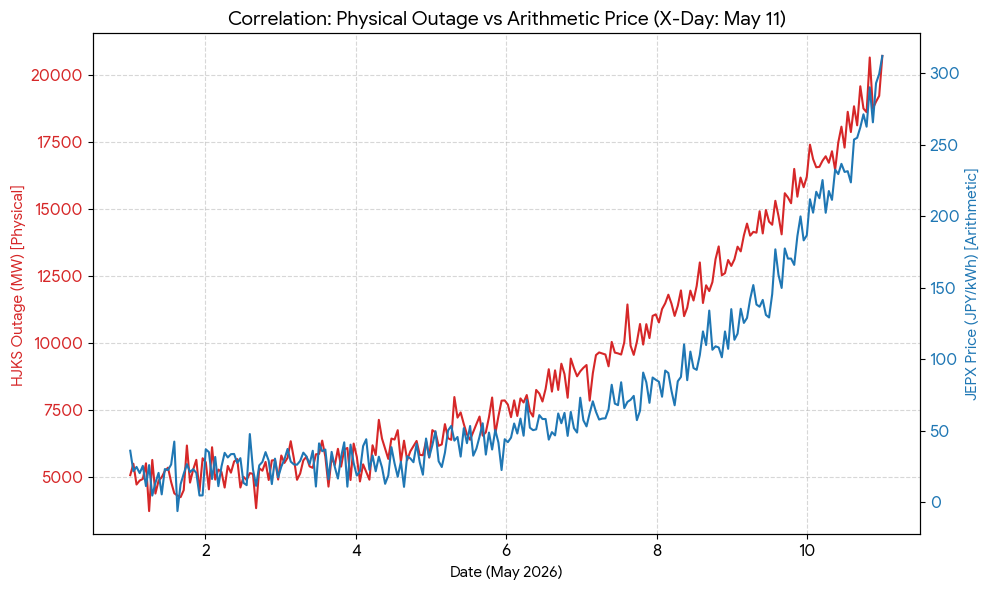
- The Era of Democratic Capitalism in Japan has effectively reached its end: The government’s unilateral, aggressive currency interventions have severely compromised the credibility of the free-market system. While these measures have temporarily forestalled a formal declaration of insolvency, they have nothing anymore to stop the underlying disintegration of the real economy in this urgent situation. Nowhere is this more evident than in the electricity market (JEPX). The exorbitant costs of LNG procured at a ‘negative spread’ in April will come out surfacing in household electricity prices. With most independent power providers having fled the market, the state has moved in to take direct control, transforming a once-liberalized sector into a state-managed utility. By mid-May, the government faces a terminal dilemma: either force consumers to shoulder catastrophic electricity bills or deplete the treasury to subsidize them. However, the fundamental problem remains—LNG is a lifeline more vital than oil. Japan has no choice but to keep buying it at any price, even as its foreign reserves evaporate. By closing the free market and stripping citizens of choice, the state has replaced the invisible hand with an iron fist. In this ‘command economy’ by necessity, Japan is already checkmated.
Face The Reality or perish/We are already in severe real zero-sum world,
A quick, objective look at the world today reveals a stark truth: It is obvious that no advanced nation or world leader has the luxury to compromise or share. Instead, we see a global scramble for resources, where authority and wealth are weaponized on an individual and national scale. Do you truly believe the state will protect you just because you follow its orders? While every nation’s ideology declares a commitment to its people—and that sentiment may be sincere—the reality is that the state no longer possesses the means to protect or the resources to provide. In fact, the state is now in a position where it must demand those very things from you.
No matter how grim the reality, if you look it in the eye and understand its mechanics, concrete solutions will emerge. With time, the probability of success increases. However, if you choose to suppress your basic survival instincts—opting instead for social dependency, blame-shifting, or escapism—you must be prepared to be discarded by society. In this merciless world of zero-sum struggle, as long as you hide from reality, your chances of survival are effectively zero.